Wildlife Removal Durham, NC
Freedom Wildlife Solutions & Pest Control
Are pests and wildlife keeping you up at night? We are your Solution!
Call for a Wildlife Removal Consultation Today!
Home » Durham County » Durham, NC » Wildlife Removal Durham, NC
Local Wildlife Removal Company In Durham, NC
Durham homeowners deal with more wildlife pressure than most people realize. The Eno River and its tributaries run directly through residential neighborhoods. Duke Forest creates a continuous wildlife corridor along the western edge of the city. Falls Lake sits to the north. These aren’t remote wilderness areas — they’re habitat systems that push bats, squirrels, raccoons, foxes, and more directly into residential rooflines and crawlspaces.
Freedom Wildlife Solutions & Pest Control is a veteran-owned wildlife removal company based in Clayton, NC. We’ve been removing wildlife from homes across Durham County since 2018, and we know exactly what Durham homes face. Our team is fully licensed, insured, and trained in humane removal and exclusion — meaning we don’t just remove the animal, we seal the entry point so it doesn’t happen again.
If something’s gotten into your attic, crawlspace, or walls, we’ll find it, remove it, and lock it out for good.
Why Durham Homeowners Choose Freedom Wildlife Solutions & Pest Control
We’re a local company — based in Clayton, serving Durham County. Not a national franchise. When you call us, you’re talking to the team that does the work.
- Veteran-owned and operated — integrity and accountability on every job
- Licensed and insured in North Carolina
- Humane methods only — no poisons, no harm to protected species
- Exclusion is included — we seal the entry point, not just remove the animal
- 500+ five-star Google reviews across Wake and Durham Counties
- We know Durham homes — the construction, the canopy, the wildlife corridors

Request Your Pest or Wildlife Service Now!
How Our Durham Wildlife Removal Process Works
Every job starts with a thorough inspection before we touch anything. Wildlife removal without proper identification and exclusion just delays the problem.
1. Inspection
We inspect the full exterior and attic — entry points, evidence of activity, nesting locations, and any damage. You get a written report of exactly what we found and what we recommend.
2. Removal
We use humane methods appropriate to the species — trapping, exclusion devices, or direct removal depending on the animal and situation. No poisons. No shortcuts.
3. Exclusion
Once the animal is out, we seal every confirmed and potential entry point with materials appropriate to the species. This is the step that prevents recurrence. Most companies skip it or do it incompletely — we don’t close out the job until every point is sealed.
4. Attic assessment
If there’s insulation damage, contamination, or structural concerns, we document it and walk you through your options. Some jobs need remediation. Some don’t. We’ll tell you honestly which category yours falls into.
Common Wildlife Problems in Durham, NC
Every market is different. Here’s what we deal with most in Durham:
Bats
Big brown bats and little brown bats are the most common species we see in Durham homes. The city’s older housing stock — particularly near downtown, Trinity Park, Watts-Hillandale, and Duke East Campus — provides ideal roost conditions. Aged wood, complex rooflines, and gaps that have developed over decades give bats easy access. NC law prohibits bat exclusion between May 1 and July 31 during maternity season, and exclusion is not possible when temperatures are below 50°F in winter. We know the windows and schedule accordingly. See our bat removal in Durham page for full details.
Squirrels
Eastern gray squirrels are most active in Durham’s mature neighborhoods in early spring and late fall. Hope Valley, Forest Hills, Watts-Hillandale, and the neighborhoods surrounding Duke Forest see high squirrel pressure due to the dense oak and pine canopy. Common entry points include roofline gaps at dormers, damaged fascia, and soffit intersections. Once inside, they chew wiring and insulation fast. See our squirrel removal in Durham page for the full removal and exclusion process.
Raccoons
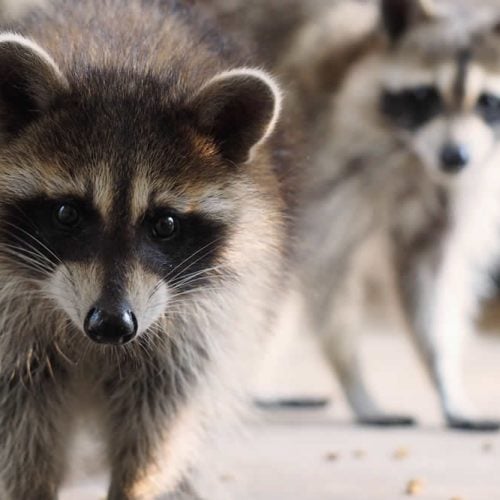
Raccoons are drawn to the creek corridors and greenways throughout Durham — the Eno River, Little River, and the American Tobacco Trail all serve as wildlife highways directly into residential areas. They’re strong enough to tear open weak points in rooflines and fascia, and a nesting female in your attic will cause significant damage. Early signs include heavy thumping at night and torn soffit panels.
Foxes and coyotes
Duke Forest and the greenway corridors support healthy fox and coyote populations in Durham. While these animals rarely enter homes, they create concerns in neighborhoods with small pets, unsecured trash, and young children. We handle removal and deterrence for both species.
Wildlife Removal Services We Offer In Durham, NC
- Bat Removal
- Beaver Removal
- Bird Removal
- Coyote Removal
- Dead Animal Removal
- Fox Removal
- Groundhog Removal
- Mole and Vole Removal
- Muskrat Removal
- Nutria Removal
- Opossum Removal
- Raccoon Removal
- Skunk Removal
- Snake Removal
- Squirrel Removal
Wildlife Removal in Durham, NC — Frequently Asked Questions
How much does wildlife removal cost in Durham, NC?
Cost depends on the animal, the extent of the infestation, and whether exclusion and attic remediation are needed. Most residential wildlife removal jobs in Durham range from a few hundred dollars for a straightforward removal to a larger investment for full exclusion and insulation restoration. We provide a written estimate after inspection — no surprises.
Is wildlife removal covered by homeowners insurance in North Carolina?
In our experience, most policies will not cover wildlife or varmint-related damage — many policies explicitly exclude it. The one exception we’ve seen approved is when wildlife damage is a direct result of another covered event, like a tree falling on the home and creating the entry point. We always recommend calling your local insurance agent — not the corporate 1-800 number — to walk through your specific policy language.
What animals are most common in Durham attics?
In Durham, we most commonly remove eastern gray squirrels, big brown bats, raccoons, and flying squirrels. Squirrels and bats are by far the most frequent calls we get from Durham homeowners, particularly in neighborhoods with mature tree cover near Duke Forest, Hope Valley, Forest Hills, and Watts-Hillandale.
When is bat removal allowed in North Carolina?
NC law protects bats during maternity season — May 1 through July 31. During this window, exclusion work that would seal bats inside is prohibited. We also don’t perform exclusion when temperatures are consistently below 50°F in winter. Outside of those restrictions, we can perform full exclusion. If you call during a restricted period, we’ll document your entry points and schedule work for the next available window.
How do I know if I have wildlife in my attic?
The most common signs: scratching or thumping sounds in the ceiling or walls (squirrels are most active at dawn and dusk; raccoons at night), musty or ammonia-like odors from the attic, visible droppings near the roofline, and staining or damage around soffit vents and fascia boards. If you’re not sure, call us — a quick inspection will tell you exactly what you’re dealing with.
Schedule Your Durham Wildlife Removal Inspection
Don’t wait on this. Wildlife damage compounds quickly — chewed wiring, contaminated insulation, and structural entry points that invite repeat intrusions. The sooner you call, the less it costs to fix.
We serve all of Durham and Durham County. Same-day inspections are available. Call (919) 584-8650 or use the form below.
Already past the wildlife issue and looking for ongoing protection? We also offer recurring pest control services in Durham — quarterly and monthly plans that keep your home covered year-round.