Are pests and wildlife keeping you up at night? We are your Solution!
Call for a Squirrel Removal Consultation Today!
Home » Durham County » Durham, NC » Squirrel Removal Durham, NC
Local Squirrel Removal Company In Durham, NC
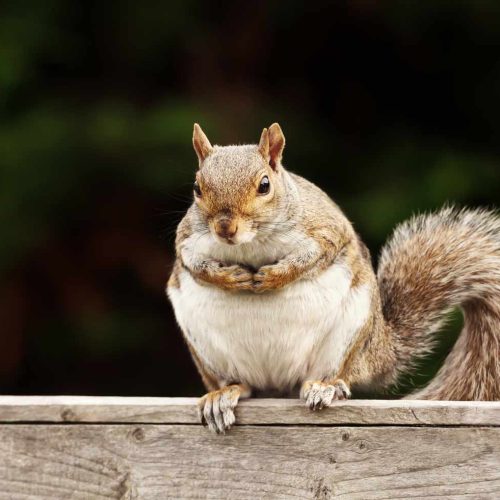
If you’re hearing scratching or thumping above your ceiling in the early morning or late afternoon, there’s a good chance you have squirrels. Eastern gray squirrels are one of the most common wildlife calls we get from Durham homeowners — and for good reason. The mature oak and pine canopy throughout Durham’s older neighborhoods gives them direct highway access to rooflines year-round.
Freedom Wildlife Solutions & Pest Control is a veteran-owned wildlife removal company serving Durham and all of Durham County. We handle squirrel removal the right way: find the animal, remove it humanely, seal the entry point, and assess whether the attic needs remediation. We don’t just trap and leave.
Not sure whether you’re dealing with squirrels or another animal? Our wildlife removal in Durham page covers bats, raccoons, and more — with guidance on identifying what you’re hearing.
Why Durham Homeowners Trust Freedom Wildlife Solutions & Pest Control
We’re a local company — based in Clayton, serving Durham County. We’re not a national franchise with a call center. When you call us, you’re talking to the team that does the work.
- Veteran-owned and operated — we take quality control seriously
- Licensed and insured in North Carolina
- Humane methods only — no poisons, no shortcuts
- Exclusion is included — we don’t just remove the animal and leave
- 5-star rated across Wake and Durham Counties
- We know Durham homes — the construction styles, the canopy pressure, the common entry points

Request Your Pest or Wildlife Service Now!
How Our Durham Squirrel Removal Process Works
Every job starts with a thorough inspection — exterior and attic — before we touch anything. Here’s what a typical Durham squirrel removal job looks like from start to finish:
1. Inspection
We walk the exterior of your home and inspect the attic. We’re looking for active entry points, secondary access routes, evidence of nesting, and any damage that needs to be addressed. You get a full report of what we find.
2. Trapping and removal
We set traps at active entry points and check them on a defined schedule. Squirrels are relocated in accordance with North Carolina wildlife regulations. We don’t use poisons — ever.
3. Exclusion
Once the squirrels are out, we seal every confirmed and potential entry point — roofline gaps, soffit intersections, fascia damage, vent covers. We use materials that squirrels can’t chew through. If they can’t get back in, they won’t be back.
4. Attic assessment
If there’s insulation damage, wiring concerns, or contamination in the attic, we’ll document it and walk you through your options. We’ll tell you honestly whether your job requires remediation.
Signs You Have Squirrels in Your Durham Home
Squirrels are active at dawn and dusk — so if the noise in your attic follows that pattern, that’s your first indicator. Here’s what to look and listen for:
- Scratching, scurrying, or rolling sounds in the attic or walls in the early morning and late afternoon
- Chew marks on fascia boards, soffit panels, or roofline trim — squirrels gnaw constantly to manage tooth growth
- Daylight visible through gaps around soffit intersections, dormer edges, or ridge cap damage
- Droppings in the attic that look similar to large mouse droppings but bigger
- Nesting material — shredded insulation, leaves, and debris pushed into attic corners
- A musty odor coming from the attic or ceiling, particularly in warmer months
In Durham, the neighborhoods with the highest squirrel activity tend to be those with the heaviest tree canopy — Hope Valley, Forest Hills, Watts-Hillandale, Trinity Park, and the Duke Forest corridor. Mature oaks and pines give squirrels direct access to rooflines with almost no effort.
What Squirrels Actually Do to Your Home
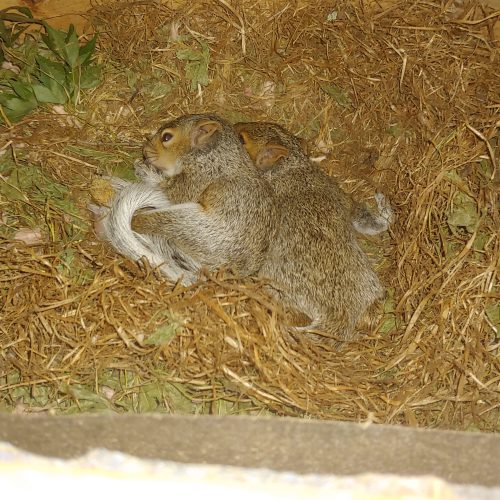
A lot of homeowners underestimate squirrel damage because the animals themselves are small. The damage they cause is not small.
Squirrels have teeth that never stop growing, which means they chew constantly — on wood, on wiring, on HVAC ducts, on anything in reach. A single squirrel in your attic for a few weeks can strip insulation from electrical wires, creating a genuine fire hazard. We’ve seen it firsthand in Durham homes.
Beyond wiring, here’s what a squirrel infestation typically leaves behind:
- Compressed or destroyed insulation — reduces energy efficiency and can require full replacement
- Chewed roof decking and structural wood at entry points
- Urine and fecal contamination in attic insulation — a health concern and an odor problem
- Damaged HVAC ducts or ductwork in attic spaces
- Secondary entry points — once one squirrel finds a way in, others follow the scent trail
The longer squirrels are in your attic, the more it costs to remediate. Early action is always cheaper. If you’ve also spotted bats around your roofline — common in Durham’s older housing stock near downtown and Trinity Park — our bat removal team handles those separately. It’s common for Durham homes to have more than one species using the same entry points.
Squirrel Removal in Durham, NC — Frequently Asked Questions
How do squirrels get into my Durham attic?
The most common entry points we find in Durham homes are gaps at soffit intersections where two rooflines meet, separated ridge cap material, damaged fascia boards, and unscreened gable vents. Durham’s older housing stock — particularly in Hope Valley, Forest Hills, and the neighborhoods near Duke Forest — tends to have more developed gap points due to age and wood weathering. Squirrels can squeeze through a hole the size of a quarter.
What time of year are squirrels most active in NC?
Squirrels have two peak activity periods in North Carolina — late winter through early spring (January through March) when they’re looking to establish nesting sites, and again in the fall (September through November) as they prepare for colder months. These are the times you’re most likely to get a new intrusion. Squirrels in an established nest are active year-round.
Does homeowners insurance cover squirrel damage in NC?
In our experience, most policies will not cover wildlife or varmint-related damage — many policies explicitly exclude it. The one exception we’ve seen approved is when wildlife damage is a direct result of another covered event, like a tree falling on the home and creating the entry point. Don’t assume you’re covered.
Every policy is different. We always recommend calling your local insurance agent — not the corporate 1-800 number — to walk through your specific policy language. A local agent who knows your coverage is the only person who can give you an accurate answer.
How long does squirrel removal take?
Most jobs are resolved within 7 to 14 days from initial inspection to final exclusion. Trapping typically takes a few days to a week depending on the size of the infestation. Exclusion work is completed once we’ve confirmed the animals are out. If attic remediation is needed, that’s scheduled separately.
Will squirrels come back after removal?
Not if the exclusion is done right. That’s why we seal every entry point — confirmed and potential — before we close out the job. Squirrels follow scent trails, so a home that had squirrels will attract new ones if it’s not properly sealed. Our exclusion work is guaranteed: if squirrels get back in through a point we sealed, we come back and fix it.
Schedule Your Durham Squirrel Removal Inspection
If you’re hearing activity in your attic, don’t wait. Squirrel damage compounds fast — the longer they’re in there, the more insulation, wiring, and wood they go through. We serve all of Durham and Durham County with same-day inspections when available.
Already past the wildlife issue and looking for ongoing home protection? We also offer recurring pest control services in Durham — quarterly and monthly plans that keep your home covered year-round.
Call (919) 584-8650 or use the form below to get started.