

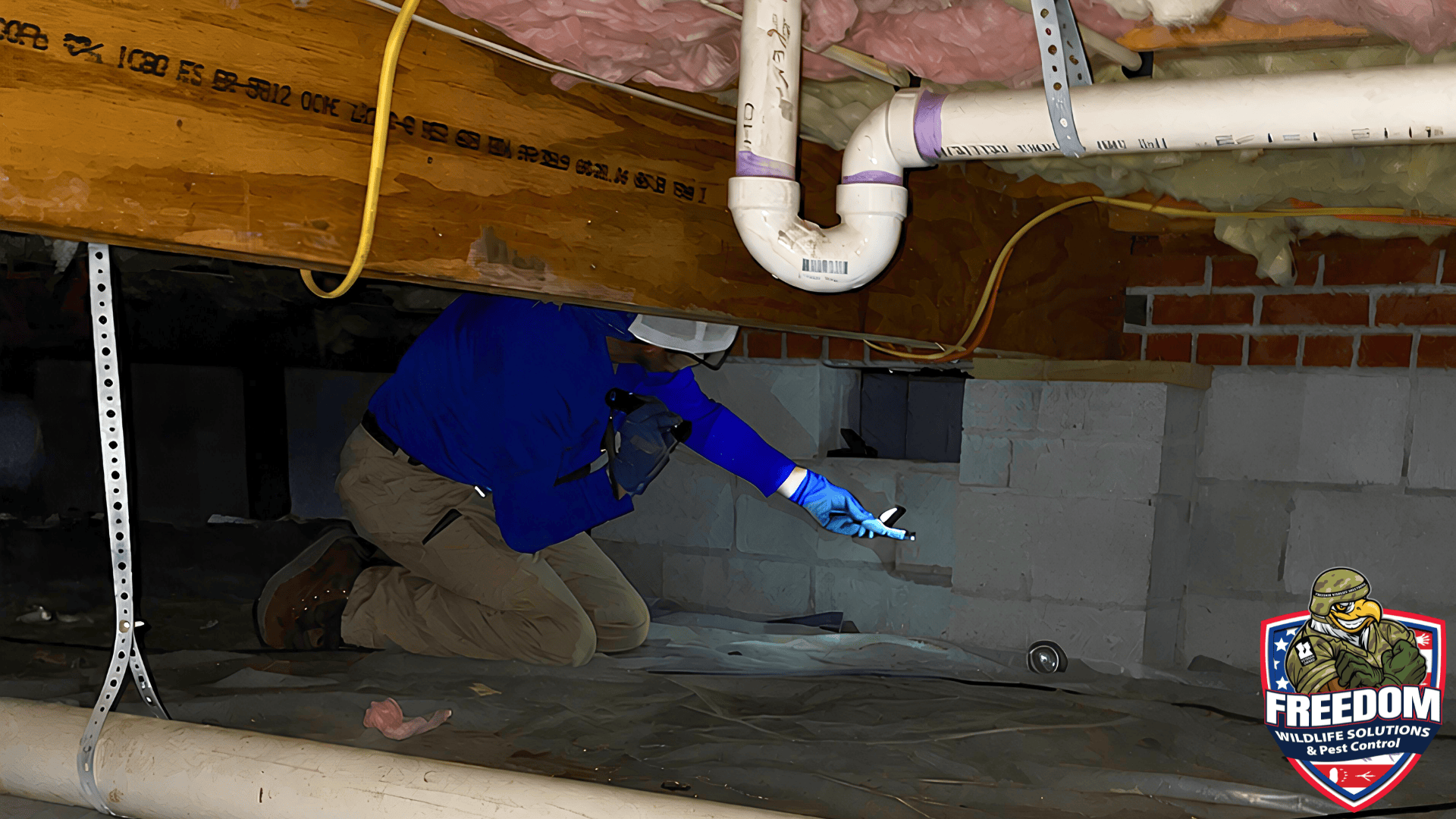
Mice in Your Apartment? Here’s How to Get Rid of Them (and Keep Them Out)
You flip the kitchen light on for a glass of water, and something small darts along the baseboard and disappears behind the stove. If that’s happened to you, you already know the feeling — and you’re not imagining it.
Mice in an apartment are more common than most renters think, especially across Raleigh and the Triangle. This is one of the fastest-growing rental markets in the country, and a lot of that housing sits close together: shared walls, shared foundations, shared utility lines. When one unit has mice, the whole building usually has a mouse problem — the tenant who spots one first is just the one who noticed.
Here’s what you need to know: how to tell if you really have mice, what to do first as a renter, who’s actually responsible for fixing it, and how to make sure they don’t come back.
First, Confirm It’s Actually Mice
One quick shadow along the wall isn’t much to go on. Before you do anything, look for the signs mice leave behind. We’ve seen these in apartments all over the Triangle:
- Droppings — small, dark, rice-shaped pellets. You’ll usually find them under the sink, in the back of cabinets, in drawers, or along baseboards.
- Gnaw marks on food packaging, cardboard, or the corners of cabinets. Mice chew constantly to keep their teeth filed down.
- A musky, ammonia-like smell in an enclosed space like a pantry or cabinet.
- Scratching or scurrying sounds inside the walls or ceiling, usually right after the lights go out.
- Small shredded nests made of paper, insulation, or fabric tucked behind appliances or in storage closets.
One mouse is rarely just one mouse. A single female can produce dozens of offspring in a year, so a problem you catch early is a lot easier to shut down than one you let ride for a few months.
Saw a Mouse in Your Apartment? Do These 4 Things First
If you’ve spotted a mouse or found droppings, the order you do things in matters — especially as a renter. Take these steps first:
- Document it. Snap a few photos of droppings, gnaw marks, or the mouse itself, and note the date. If this turns into a back-and-forth with your landlord, you’ll want a record.
- Notify your landlord or property manager in writing. A text or email counts — you want it in writing, not just a phone call. In most rentals, pest issues are the landlord’s responsibility to address, and putting them on notice starts that clock.
- Protect your food and clean up droppings safely. Move dry goods into sealed glass or hard-plastic containers. Don’t sweep or vacuum droppings dry — mist them with a disinfectant cleaner first, wipe with a paper towel, and wash your hands. Mouse droppings can carry bacteria, so this isn’t a step to skip.
- Hold off on poison. Store-bought rodenticide is the one thing we’d steer a renter away from. A poisoned mouse often dies inside a wall or under a cabinet, and then you’re dealing with a smell you can’t reach — in a unit you don’t own. Snap traps and, better yet, sealing entry points are far cleaner.
Who’s Responsible — the Landlord or the Tenant?
This is the question we hear most from renters: “Do I have to pay to fix this, or does my landlord?” It comes up enough that “mice in my apartment, what are my rights” is one of the most-searched rodent questions out there.
The general answer in North Carolina: a landlord has a legal duty to keep a rental “fit and habitable,” and a mouse infestation you didn’t cause usually falls on the landlord to resolve — not the tenant. That’s why notifying them in writing matters so much. It’s different if the infestation traces back to how a unit is being kept, which can shift responsibility to the tenant.
A few things worth knowing:
- Your lease may spell out who handles pests. Read that section before you assume anything.
- Written notice puts the responsibility clearly on the landlord to act within a reasonable time.
- In multi-family buildings, mice are almost never a one-unit problem — which is why a serious landlord or property manager should be treating the whole building, not just your unit.
Note: this is general information, not legal advice. If you’re in a dispute with a landlord, check your lease and North Carolina landlord-tenant law, or talk to a local tenant resource.
If you manage or own rental property yourself, this cuts the other way: mice are the single most common complaint tenants file, and the buildings that stay ahead of it are the ones on a real, ongoing pest program instead of chasing one work order at a time.
What You Can Do Right Now (Renter-Safe Steps)
While you wait on your landlord, there’s plenty you can do to make your unit a lot less friendly to mice:
- Seal food. Everything in the pantry goes into hard containers. Mice are drawn to smell — a cracked bag of rice is an open invitation.
- Take the trash out nightly and keep the can sealed. Don’t leave pet food out overnight either.
- Clean under and behind appliances. Crumbs behind the stove and fridge are a mouse buffet.
- Set snap traps along walls where you’ve seen droppings — mice run the edges of a room, not the middle. A dab of peanut butter beats cheese every time.
- Look for gaps. Mice can squeeze through an opening the width of a pencil. Check around pipes under the sink, behind the stove, and where cables enter the wall. Steel wool packed into a gap buys you time until it’s sealed properly.
These steps knock down the activity you can reach. The part you usually can’t reach on your own — the actual entry points feeding mice into the building — is where the real fix lives.
Why Traps Alone Rarely Solve It in an Apartment
Here’s the trap most renters fall into: they catch a mouse or two, the activity goes quiet for a week, and they figure it’s handled. Then it comes right back.
In an apartment, that’s almost guaranteed if nobody has sealed the ways mice are getting in. Traps deal with the mice that are already inside. They do nothing about the gap under the utility chase, the worn weather-stripping on a shared door, or the opening where a pipe runs between units. As long as those stay open, the building keeps restocking your unit with mice.
That’s the difference between knocking a problem down and actually ending it. The companies that end it treat the structure, not just the symptom — trapping out what’s inside and then sealing the building up so nothing new can follow.
How Freedom Wildlife Solutions & Pest Control Handles It
Freedom Wildlife Solutions & Pest Control is a pest control company that specializes in wildlife and rodent work — which means we don’t just spray a baseboard and leave. We find how mice are getting in, get the active ones out, and seal the building so the problem doesn’t restart.
For renters, that usually starts with a thorough inspection and a one-time service to knock the problem down and identify the entry points — information you can hand straight to your landlord. For the property owners and managers we work with, we build ongoing coverage that keeps a whole building protected, sold on the pests it keeps out, not on how often a truck shows up. Our rodent coverage is built into our Standard Defense and Premium Guard plans, so mice are handled as part of the protection, not as a surprise.
We work across Raleigh, Cary, Durham, Clayton, Garner, and the rest of the Triangle — a lot of it in exactly the kind of apartments and rentals where mice thrive. If you want to see how we approach it, here’s our overview of professional rodent control, our rodent control in Raleigh, and rodent control in Durham for the student-heavy rentals over that way.
“This company was awesome, quick and efficient. Blaize and Daniel did an awesome job! I had a mouse nest problem and they helped get the nest out and set traps that caught the mouse that night. Couldn’t recommend more!”
— Christian Baucom, 5-star Google review (Rodent Control)
Don’t Wait for It to Get Worse
A mouse you saw last night is easier and cheaper to deal with than a full infestation next month. Confirm the signs, notify your landlord in writing, seal up your food, and get a professional eye on how they’re getting in.
If you’re renting in Raleigh, Durham, Clayton, or anywhere in the Triangle and you’ve got mice — or you manage property and you’re tired of the same rodent complaints — give Freedom Wildlife Solutions & Pest Control a call. We’ll take care of it.
Frequently Asked Questions
Why do I suddenly have mice in my apartment?
Mice move indoors looking for food, warmth, and shelter, and apartments make that easy — shared walls, utility chases, and close-together units give them plenty of ways in. If a neighboring unit or common area has mice, yours can get them too. It usually has nothing to do with how clean your apartment is.
What should I do the moment I see a mouse in my apartment?
Photograph any droppings or damage, note the date, and notify your landlord or property manager in writing. Then move your dry food into sealed containers, clean up droppings safely (mist with disinfectant first — never sweep them dry), and set snap traps along the walls. Hold off on poison, which can leave a dead mouse decomposing inside a wall.
Is it my landlord’s responsibility to get rid of mice?
In most cases in North Carolina, yes. Landlords have a duty to keep rentals fit and habitable, and a mouse infestation you didn’t cause is generally theirs to resolve — which is why written notice matters. Responsibility can shift if the problem stems from how the unit is kept. Check your lease, and treat this as general information, not legal advice.
Will one or two traps get rid of the mice?
Rarely, in an apartment. Traps remove the mice already inside but do nothing about how they’re getting in. Unless the entry points are sealed — often shared, building-wide gaps a renter can’t reach — the building keeps sending new mice into your unit. Lasting results come from combining trapping with exclusion.
How do I keep mice from coming back?
Seal food in hard containers, take out trash nightly, keep crumbs cleaned up behind appliances, and get the entry points sealed. That last part is the one that actually keeps them out, and it usually takes a professional inspection to find every gap — especially in a multi-unit building.
