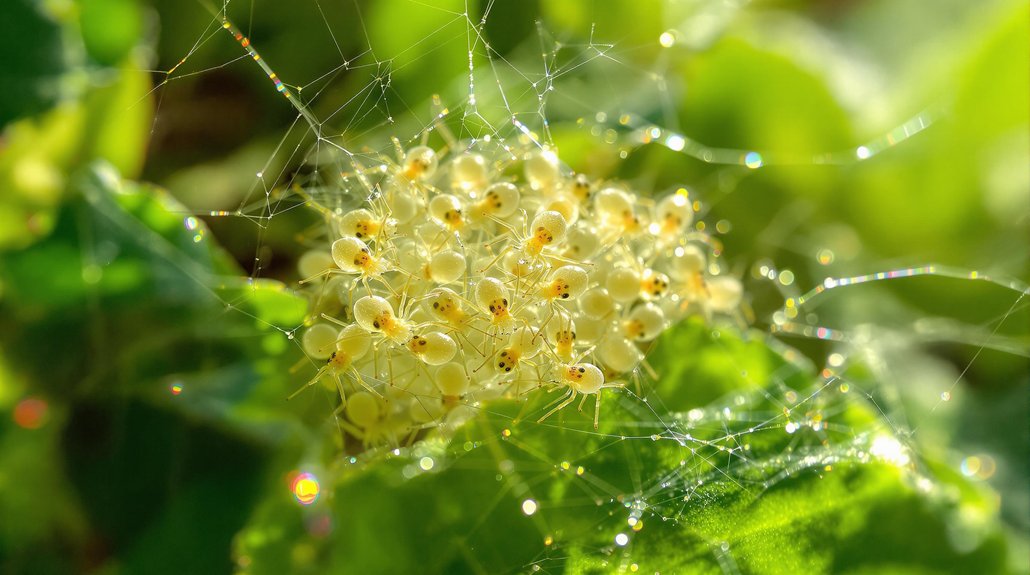
To get rid of baby spiders, start by locating their hiding spots, like corners and behind furniture. Use a vacuum to remove them and their webs, and dispose of the bag afterward. Spraying a vinegar solution around windows and entry points can help deter future infestations. Sealing cracks and keeping your home clean prevents more babies from arriving. If the problem persists, exploring other tips could help you manage the situation better.
Key Article Highlights
- Identify baby spiders early by inspecting webs and egg sacs in common hiding spots.
- Use vacuuming to safely remove spiderlings and webs, then dispose of the vacuum bag.
- Spray areas with vinegar or essential oil-based repellents to deter further spider hatching.
- Seal cracks and clutter to eliminate hiding spots and prevent new infestations.
- Seek professional pest control if the baby spider population grows or persists despite DIY efforts.
Identifying and Locating Baby Spiders in Your Home
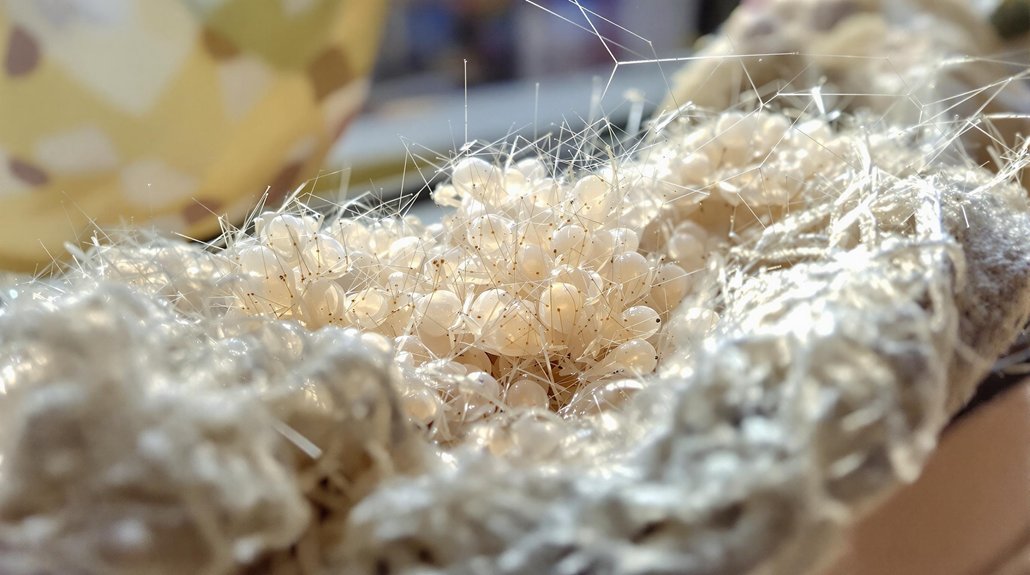
Baby spiders, also known as spiderlings, are tiny and often hard to spot at first. To identify them, using effective spider identification techniques is key. Look closely at webs or egg sacs where small, moving dots may be visible. These tiny spiders are usually found in common spider habitats like corners, behind furniture, or near windows. They tend to stay close to their egg sites until they grow larger. Spotting their small size and delicate movements helps distinguish them from dust or debris. Regularly inspecting these usual hiding spots can help locate baby spiders early. Understanding their common habitats makes it easier to find and monitor them, which is vital for managing their presence in your home. Early detection is essential for effective control.
Safe and Effective Methods to Remove Baby Spiders
Removing baby spiders safely and effectively can be straightforward with the right approach. Understanding spider behavior helps in choosing the best methods. Home remedies like vinegar sprays or soapy water target web areas and discourage re-entry. Here’s a quick guide:
| Method | How It Works | Tips |
|---|---|---|
| Manual removal | Physically removes spiders | Use gloves and a jar |
| Vinegar solutions | Disrupts web and deters spiders | Spray around corners |
| Vacuuming | Sucks up spiders and webs | Dispose of bag afterward |
These methods are safe and eco-friendly, minimizing harm to humans and pets. Being aware of spider behavior helps in timing the removal and reducing future visits. Using simple home remedies can make the process effective without harsh chemicals.
Preventing Future Infestations of Baby Spiders
Once baby spiders are removed from the home, the next step is to prevent them from coming back. Implementing preventative measures is key to avoiding future infestations. Spider proofing tips include sealing cracks and gaps around windows, doors, and the foundation to block entry points. Regularly cleaning and decluttering helps eliminate hiding spots and reduces webs. Keeping outdoor areas tidy by trimming plants and removing debris minimizes spider habitats close to the house. Installing screens on vents and windows adds an extra barrier against incoming spiders. Additionally, reducing indoor clutter and storing items in sealed containers can prevent spiders from nesting inside. These preventative measures create an unwelcoming environment for spiders and markedly lower the chances of future baby spider invasions.
Natural Remedies to Deter Baby Spiders

Natural remedies can be effective ways to keep baby spiders away without using harsh chemicals. Essential oils like peppermint, eucalyptus, and citrus are popular choices because their strong scents repel spiders naturally. Mixing a few drops of these oils with water creates homemade sprays that can be applied around windows, doorways, and crevices where spiders might enter. These sprays are simple to make and safe for homes with children or pets. Regular application helps maintain a barrier that baby spiders find unpleasant, encouraging them to stay away. Using essential oils and homemade sprays is a cost-effective, eco-friendly approach that provides peace of mind while reducing the likelihood of infestations. This method offers a gentle yet effective way to deter baby spiders naturally.
When to Seek Professional Pest Control Assistance
Sometimes, despite using natural methods and regular cleaning, baby spider problems can persist or worsen. When this happens, it’s time to contemplate professional pest control options. Professional services have the expertise and tools to handle stubborn infestations effectively. Here are some signs to look out for:
- The spider population keeps growing despite efforts.
- You notice webs in hard-to-reach spots.
- Baby spiders are appearing in multiple rooms.
- Previous DIY treatments don’t work over time.
In such cases, hiring pest control professionals is the best move. They can identify the source of the problem and apply targeted treatments. This approach guarantees the infestation is thoroughly managed and reduces the risk of future issues. Mastering when to seek help is key to keeping your home spider-free.