


Ants often go into beds while searching for food, water, or shelter inside the bedroom. They are attracted to crumbs, sweat, moisture, and small food sources like skin flakes or spills. Ants use scent trails to find their way and can enter through tiny cracks or gaps. Different types of ants, such as carpenter or fire ants, may invade sleeping areas. To learn more about preventing or removing ants from beds, continue exploring this topic.
Key Article Highlights
- Ants are attracted to food residues, sweat, and moisture, which can be present in beds.
- They often enter beds through cracks, gaps, or bedding seams, following pheromone trails.
- Common signs include ant trails on sheets, mattress seams, or unexplained rustling noises.
- Certain species, like carpenter ants, may nest nearby and invade beds seeking moisture or food.
- Preventative measures include sealing entry points, maintaining cleanliness, and removing attractants from bedding.
Why Do Ants Come Near Beds?
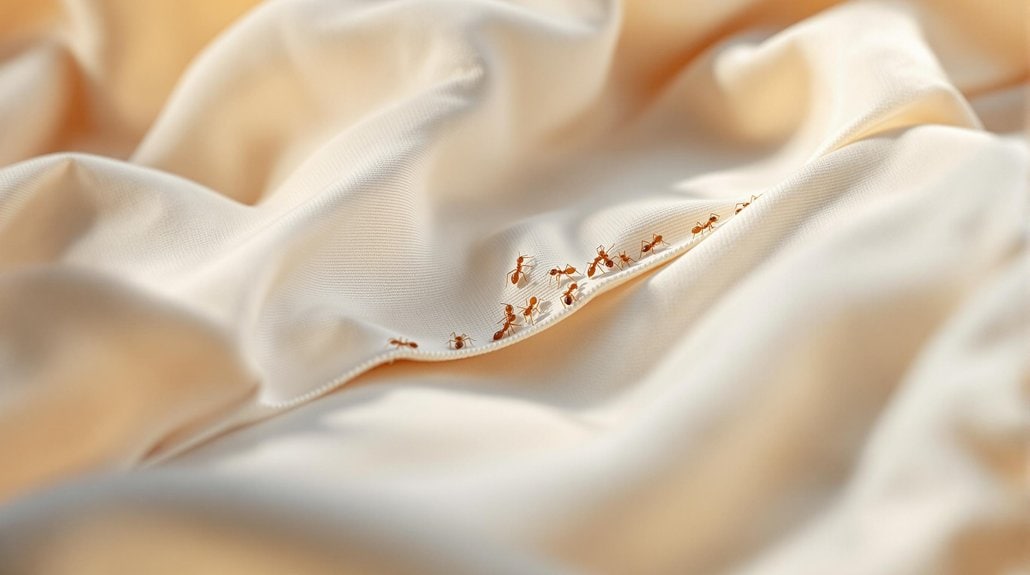
Ants often come near beds because they are searching for food or water. Their behavior shows they are attracted to places where crumbs, sweat, or moisture might be present. Beds can provide small food sources like skin flakes or spilled drinks, which appeal to ants. Additionally, sleeping habits create a warm, humid environment that ants find inviting. The warmth from a person’s body and the moisture in bedding can attract ants looking for water. They do not intentionally seek beds but follow their natural instincts to find sustenance. Understanding ant behavior helps explain why they may gather near sleeping areas. Recognizing these habits can help prevent ants from establishing a presence in or around beds.
Common Signs of Ant Infestation in Bedrooms
One sign of an ant problem is seeing trails of ants moving across the floor or walls. People might also notice strange noises in the bedroom, such as rustling sounds. These signs can help identify an ant infestation early.
Visible Ant Trails
Visible ant trails are a common sign of an infestation in bedrooms. These trails show how ants communicate and follow each other’s paths. Ant behavior includes leaving a scent trail, which helps others find food sources. When ants find food or water, they often mark a trail with a chemical called a pheromone. This makes it easy for other ants to follow the same route. In bedrooms, these trails may appear as thin, dark lines on walls, floors, or furniture. The presence of visible ant trails indicates active movement and a large enough colony to maintain these paths. Recognizing these signs helps homeowners understand that ants are using specific routes, which can lead them directly to the nest. Addressing these trails early can prevent a bigger problem.
Unusual Bedroom Noises
Have you ever heard strange noises coming from your bedroom walls or ceiling? These unusual sounds may be a sign of an ant infestation. Ants are active mostly at night, engaging in nocturnal activities that can create subtle noises. These sounds often include faint scratching or rustling, which can be mistaken for other pests. The noises usually come from inside the walls or ceiling, indicating ants are moving within the structure.
| Sound Type | Time of Activity | Possible Cause |
|---|---|---|
| Scratching | Night | Ants moving inside |
| Rustling | Night | Ant trails or nests |
| Clicking | Night | Ant colony activity |
| Scuttling | Night | Ants running around |
| Murmuring | Night | Ant communication |
How Ants Find Their Way Into Beds
Ants find their way into beds using scents and trails they leave behind. They also enter through small cracks or gaps around windows and floors. These entry points help them access the bed area easily.
Scents and Trails
Many ants use scents and trails to find their way into beds. They leave behind ant pheromones, which create scent trails that guide others. These trails are strong signals that help ants follow paths repeatedly. When an ant finds food or a safe place, it marks the route with pheromones. Other ants detect these scent trails and follow them. The more ants travel the trail, the stronger the scent becomes. This process makes the trail more visible to other ants, including those seeking entry into beds.
| Ant Behavior | Trail Significance |
|---|---|
| Leave pheromones | Mark routes to resources |
| Follow scent trails | Find food and shelter |
| Strengthen trails | Guide more ants |
| Detect scent | Locate entry points |
| Use scent cues | Navigate efficiently |
Entry Points and Access
Entry points are the places where ants can access beds. These entry points are small openings or gaps that ants use as access routes into a home. Common entry points include cracks in walls, gaps around windows and doors, and spaces around pipes or wires. Ants can also enter through tiny holes in bedding or mattress seams. They follow these access routes to find food, water, or shelter. Understanding where these entry points are helps in controlling ant problems. Sealing cracks and gaps can block their access and reduce the chance of ants entering beds. Regular inspection of the home’s foundation, windows, and door frames is important. By identifying and sealing these entry points, homeowners can prevent ants from finding their way into beds and other areas inside the home.
Types of Ants That Might Invade Sleeping Areas
Several types of ants are known to sometimes invade sleeping areas. Carpenter ants are large, black or dark brown ants that can nest in wood, including furniture or walls near bedrooms. They do not carry disease but can damage structures. Fire ants are smaller, reddish, and aggressive. They build mounds outdoors but may enter homes in search of food or water, sometimes reaching beds. Both types are active during warm months and are attracted to sweet or greasy foods, which can lead them into sleeping areas. Carpenter ants prefer moist, decayed wood, while fire ants are more likely to invade if they find a pathway inside. Understanding these ants helps in preventing their entry into beds and sleeping zones.
The Risks of Having Ants in Your Bed
Having ants in a bed can pose several health and hygiene risks. Ant behavior shows they often crawl on surfaces searching for food and moisture. When they invade a bed, they can carry bacteria and germs, which may lead to infections or allergic reactions. Their presence can also cause discomfort, making it hard to sleep. Additionally, ants can contaminate bedding with dirt or waste, increasing the chance of illness. For homeowners, pest control becomes important to prevent these risks from growing. Removing ants early helps reduce the chance of them spreading germs or creating nests in the bed. Overall, understanding ant behavior and acting quickly can help keep sleeping areas safe and clean. Having ants in a bed is not just an annoyance but a health concern.
Natural and Chemical Methods to Deter Ants
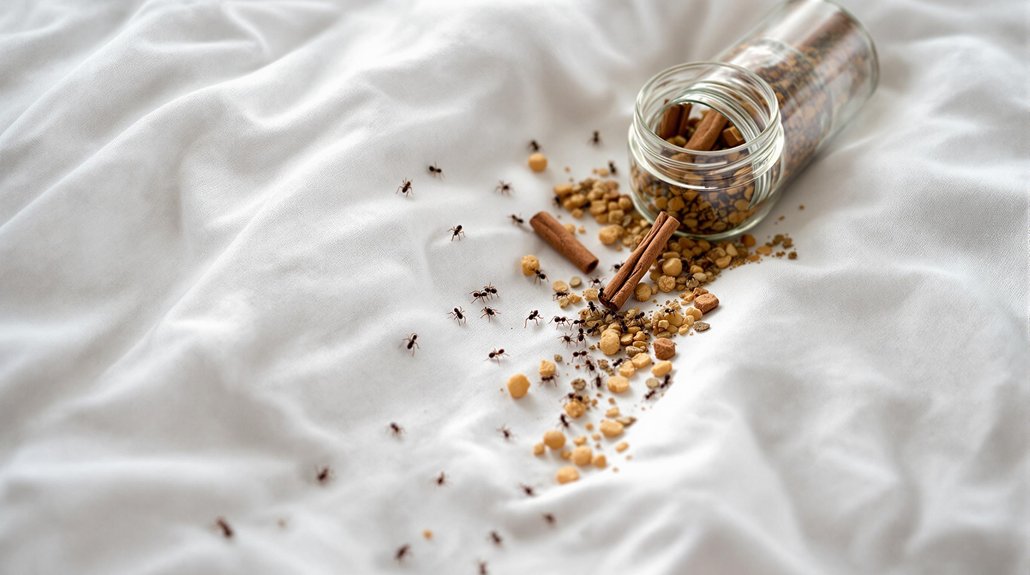
People use natural repellents like peppermint and vinegar to keep ants away. These methods can be effective, but results vary. Chemical barriers may work better but can be unsafe for people and pets.
Natural Repellents Effectiveness
Are natural repellents effective at keeping ants away? Many people try natural remedies like peppermint oil and vinegar solution to deter ants. Peppermint oil has a strong smell that ants dislike, and applying it around entry points may reduce their presence. A vinegar solution, made by mixing vinegar with water, is also popular. Its strong scent can mask ants’ scent trails, confusing them and discouraging entry. However, the effectiveness of these natural repellents varies. Some find they work well for a short time, but others see little impact. Natural repellents are generally safe and inexpensive, making them appealing. Still, they may need frequent reapplication to stay effective. Overall, while natural repellents can help, they are not always a complete solution for ant control.
Chemical Barriers Safety
Chemical barriers are commonly used to prevent ants from entering homes. These include chemical repellents that deter ants from crossing certain areas. When using chemical methods, safety precautions are important to avoid harm to people and pets. Proper handling and storage reduce risks.
| Chemical Repellents | Safety Precautions |
|---|---|
| Keep away from children | Read labels carefully |
| Use in well-ventilated areas | Wear protective gloves |
| Apply only as directed | Store chemicals safely |
| Avoid contact with skin | Keep out of reach of pets |
Mastering the safe use of chemical barriers guarantees effective ant control without health hazards. Proper precautions protect everyone in the home while keeping ants away.
Preventative Measures to Keep Ants Out of Bedrooms
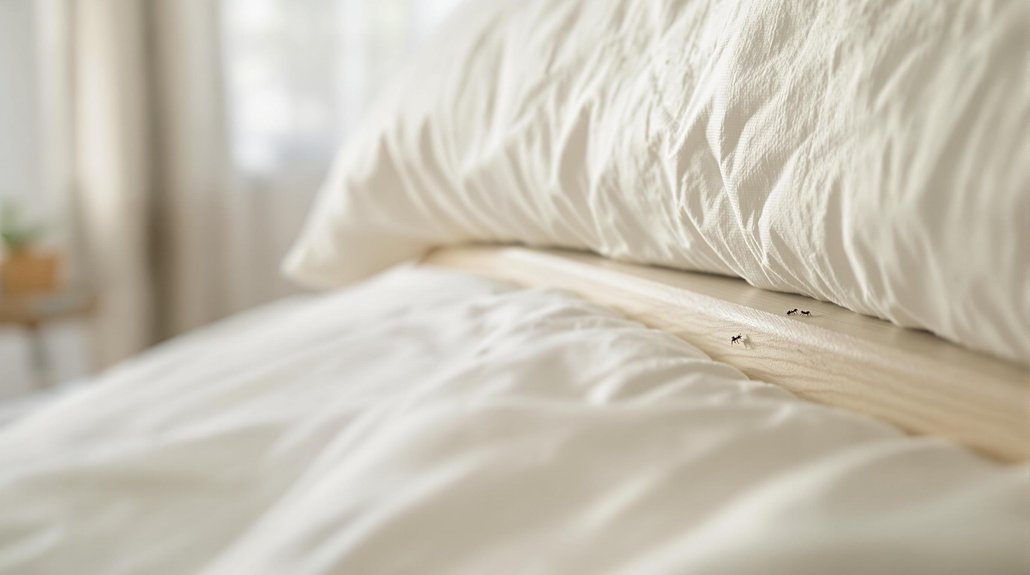
To prevent ants from entering bedrooms, it is important to take simple steps that block their access points. Using ant proofing techniques such as sealing cracks and gaps around windows, doors, and walls can stop ants from finding entry. Keeping the bedroom clean is also essential; removing food crumbs, spills, and clutter reduces attractants for ants. Regular sweeping and wiping surfaces help eliminate scent trails that ants follow. Ensuring that trash is tightly closed and not left inside the bedroom discourages pests. Maintaining a tidy environment makes it harder for ants to locate food or shelter. These measures are effective in reducing the chances of an ant problem developing and help keep bedrooms pest-free. Proper prevention creates a safer, cleaner space for everyone.
How to Identify the Source of an Ant Problem
Identifying the source of an ant problem is an important step in controlling the pests. Different ant species have different habits and nests. Some ants build their nests indoors, while others come from outside. To find the source, observe where ants enter and exit the home. Look for trails along walls, baseboards, or near windows. Check dark, moist areas like basements or under sinks. Noticing the type of ant can help determine where they are nesting. Knowing the species helps in pest control because each species needs specific treatment. Effective control begins with locating the nest. Once the source is found, targeted measures can reduce or eliminate the ant problem. Proper identification and understanding of ant behavior are key to successful pest control.
The Role of Food and Moisture in Attracting Ants to Bedrooms
Food and moisture are two main factors that attract ants into bedrooms. Ants seek out food sources such as crumbs, spilled drinks, or leftover snacks. Even small amounts of food can draw them inside. Moisture levels also play an important role; ants need water to survive, so they are attracted to areas with high humidity or leaks. Bathrooms and bedrooms with damp bedding or wet spots can become targets for ant activity. When food sources are accessible and moisture levels are high, ants are more likely to enter bedrooms in search of sustenance. Removing food residues and controlling moisture can help reduce their presence. Understanding these factors is essential for effective prevention and control of ant problems in sleeping spaces.
Tips for Thoroughly Eliminating Bed-Invading Ants
Eliminating bed-invading ants requires careful and thorough cleaning. Understanding ant behavior helps identify where they hide and how they travel. First, locate and remove food sources, as ants are attracted to crumbs and spills. Next, clean bedding, mattress seams, and nearby furniture with soapy water to remove scent trails. Use elimination strategies such as sealing cracks and entry points to prevent ants from returning. Applying ant baits near suspected entry areas can effectively reduce their numbers. Regular vacuuming and dusting eliminate crumbs and debris that attract ants. Monitoring ant activity helps determine if further treatment is needed. Consistent cleaning and sealing entry points are key for long-term control. Proper understanding of ant behavior enhances the success of elimination strategies. If you need help with Ant Control in Raleigh, NC contact Freedom Wildlife Solutions & Pest Control.
