

Sleeping with a spider in the room is generally safe since most household spiders are harmless and avoid human contact. They usually do not bite unless threatened, and their presence can even help control pests. However, some people may worry about potential bites or allergies. Knowing how to identify common spiders and ways to discourage them from sleeping areas is helpful. To learn more about how to safely coexist with spiders at home, continue exploring this topic.
Key Article Highlights
- Most household spiders are harmless and avoid biting unless provoked.
- Venomous or aggressive spider species are rare in typical home environments.
- Bites from spiders generally cause minor irritation, not serious health issues.
- Sleeping near spiders can cause discomfort or sleep disturbances but is usually not dangerous.
- Proper home maintenance and natural deterrents can minimize spider presence and reduce risks.
Common Household Spiders and Their Habitats
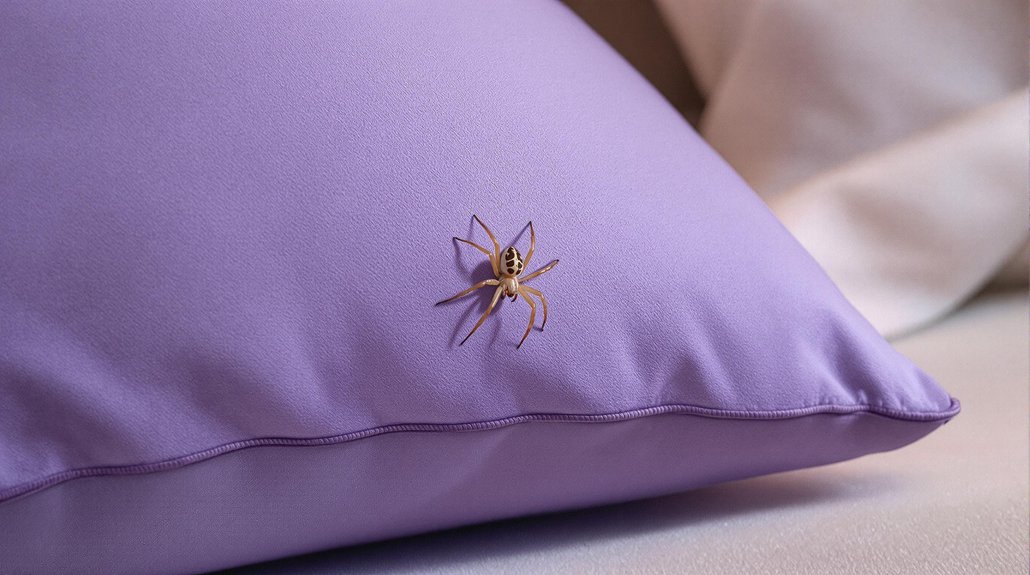
Many common household spiders prefer quiet, undisturbed areas where they can find food and shelter. These common species often inhabit corners, behind furniture, and inside closets. They seek out dark, stable environments that provide protection and easy access to prey such as small insects. Spider habitats inside homes include basements, attics, and storage spaces, where clutter offers hiding spots and web-building sites. Some species thrive near windows or doorways, catching insects attracted to light. Understanding these habitats helps in managing spider presence without unnecessary concern. These spiders are typically harmless and play a role in controlling indoor insect populations. Recognizing common species and their preferred habitats can aid in reducing unwanted encounters while maintaining a safe environment.
Are Spiders Dangerous to Humans?
Spiders are generally not dangerous to humans. Their behavior is usually passive, and they tend to avoid human interaction. Most spider species bite only when threatened or handled improperly. When they do bite, injuries are typically minor, causing irritation or swelling rather than serious health issues. Spider behavior indicates that they do not seek out humans as prey or threats. Instead, they prefer to stay hidden and remain undisturbed. Dangerous spider species are rare and tend to have specific habitats that minimize contact with people. Overall, the risk posed by spiders is low, and their presence in a room does not usually threaten human safety. Understanding their behavior can help reduce fear and promote coexistence.
The Role of Spiders in Pest Control
Spiders play an important role in controlling pest populations indoors and outdoors. Their spider ecology helps reduce insects like flies, mosquitoes, and moths naturally. By preying on these pests, spiders decrease the need for chemical pest control methods. Many spiders are effective hunters, using webs or active hunting to catch food, which benefits human living spaces. Understanding this role can help people appreciate their presence. The table below shows common pests controlled by spiders:
| Pest Type | Spider Species | Benefits |
|---|---|---|
| Flies | House spiders | Reduce fly populations |
| Mosquitoes | Orb-weavers | Decrease mosquito bites |
| Moths | Jumping spiders | Protect stored foods |
This natural pest control is crucial for maintaining balanced ecosystems and cleaner homes.
Risks of Sleeping Near Spiders
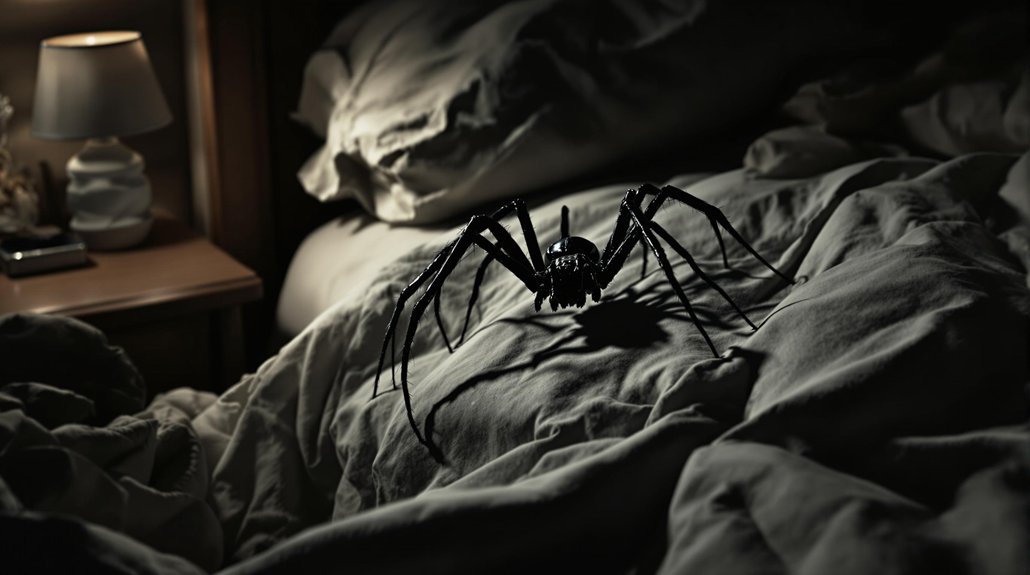
Sleeping near spiders can pose certain risks, especially if the spiders are venomous or aggressive. Spider behavior varies; some may react defensively if disturbed during sleep. Such reactions can lead to bites, which may cause allergic reactions or health issues in sensitive individuals. Additionally, the presence of spiders can cause sleep disturbance, as their movement or sudden appearance may wake a person. This disruption can lead to poor sleep quality and fatigue. While most spiders are harmless and prefer to avoid humans, the potential for bites remains a concern when sleeping in close proximity. Understanding spider behavior helps assess the risk and manage the environment accordingly. Overall, sleeping near spiders increases the chance of sleep disturbance and health risks, especially if the species is unknown or venomous.
Myths and Facts About Spiders in the Bedroom
Many beliefs about spiders in the bedroom are based on myths rather than facts. Spider folklore and cultural beliefs often depict spiders as dangerous or harmful, but these ideas are exaggerated. In reality, most spiders are harmless and help control pests. Cultural beliefs vary; some see spiders as symbols of good luck, while others associate them with bad omens. The myth that all spiders are venomous and pose a threat to humans is false. Scientific evidence shows that spiders rarely bite unless provoked and rarely cause serious health issues. Understanding these facts can help reduce unnecessary fear. Recognizing the difference between myth and fact encourages a more accurate view of spiders and their role in the environment.
Signs of Spider Bites and What to Do
Spider bites can cause symptoms such as redness, swelling, and pain. Immediate first aid includes cleaning the area and applying ice. Medical help should be sought if symptoms worsen or if there are signs of an allergic reaction.
Recognizing Bite Symptoms
Recognizing the symptoms of a spider bite is important for proper care. Accurate symptom identification helps determine if medical attention is needed. Common signs include redness, swelling, and a small puncture mark. Some bites may cause pain, itching, or a burning sensation. In rare cases, symptoms can escalate to muscle pain, fever, or nausea. The table below summarizes typical bite symptoms:
| Symptom | Description | Possible Cause |
|---|---|---|
| Redness & Swelling | Area becomes red and puffy | Local allergic reaction |
| Pain or Itching | Discomfort around the bite | Inflammatory response |
| Puncture Mark | Small hole at bite site | Direct bite indication |
Proper bite recognition guarantees appropriate response and care.
Immediate First Aid Steps
When someone notices a bite or unusual skin reaction, it is important to act quickly to minimize potential health risks. The first step is to clean the bite area with soap and water to prevent infection. Applying a cold compress can reduce swelling and pain. Over-the-counter pain relievers may help manage discomfort. Monitoring for signs of allergic reactions, such as increased swelling, redness, or difficulty breathing, is essential. For bite treatment, avoid scratching to prevent infection. Elevating the affected area can also help limit swelling. If symptoms worsen or if there are signs of a serious reaction, seeking medical attention is necessary. These immediate first aid steps help control symptoms and reduce complications, providing a safe response to spider bites.
When to Seek Medical Help
Knowing when to seek medical help after a bite is important for proper care. Signs of a serious spider bite include intense pain, spreading redness, swelling, or blistering. If symptoms worsen or if there are signs of an allergic reaction, immediate medical help is needed. Watch for fever, muscle cramps, or difficulty breathing. Use the following table to identify when to seek medical help:
| Symptom | Action Needed | Urgency Level |
|---|---|---|
| Severe pain or swelling | Seek medical help immediately | High |
| Signs of infection (pus) | Visit a healthcare professional | Moderate |
| Allergic reactions (hives, difficulty breathing) | Get emergency medical help | Critical |
Prompt medical attention guarantees proper treatment and reduces complications.
How to Safely Coexist With Spiders at Home

Creating a safe space involves keeping areas clean and free of clutter where spiders might hide. Natural deterrents, like essential oils or vinegar, can discourage spiders from entering the home. Regular home maintenance, such as sealing cracks and fixing leaks, helps prevent spider infestations.
Create a Safe Space
To coexist safely with spiders at home, it is important to establish designated areas where they can stay without causing concern. Creating a safe environment helps maintain a peaceful sleep and reduces the risk of unwanted encounters. These areas should be away from bedrooms and common living spaces. Consider the following steps:
- Identify quiet corners or storage spaces for spiders.
- Use low-traffic zones as their habitat.
- Keep clutter to minimize hiding spots.
- Seal cracks and gaps to limit entry points.
- Regularly clean to discourage unwanted pests.
Use Natural Deterrents
Using natural deterrents is an effective way to discourage spiders from settling in living spaces. Natural repellents, such as essential oils, can be used to create an environment unattractive to spiders. Oils like peppermint, tea tree, and eucalyptus are known for their strong scents that repel these arachnids. To apply, mix a few drops of essential oil with water and spray around windows, doorways, and corners. Repeating this process regularly maintains the scent barrier. Unlike chemical repellents, natural options are safe for humans, pets, and the environment. Using essential oils not only deters spiders but also adds a pleasant aroma to the home. Employing natural deterrents provides a humane, eco-friendly method to coexist peacefully with spiders while minimizing unwanted encounters.
Proper Home Maintenance
Maintaining a clean and organized home can greatly reduce the chances of spider encounters. Regular home cleaning removes clutter and food sources that attract spiders. Proper spider proofing involves sealing cracks and gaps around doors, windows, and walls to prevent entry. Eliminating hiding spots such as piles of clothes, wood, or debris is essential. Ensuring that screens are intact on windows and doors helps keep spiders out. Reducing moisture by fixing leaks and using dehumidifiers discourages spider activity. These steps create a less inviting environment for spiders and promote safe coexistence. Consistent home maintenance not only minimizes spider presence but also helps maintain a healthy living space. Effective home cleaning and spider proofing are key to managing spider populations naturally and safely.
Tips for Deterring Unwanted Spiders From Sleeping Areas
Unwanted spiders in sleeping areas can cause discomfort and concern. To deter these insects, various methods can be employed. One effective approach is using spider repellents, which often contain natural or chemical ingredients that discourage spiders from entering. Home remedies such as vinegar solutions, citrus peels, or essential oils like peppermint can also serve as deterrents. Applying these around bed frames, windows, and doorways helps create a barrier. Keeping the area clean and clutter-free reduces hiding spots for spiders. Sealing cracks and gaps in walls and windows prevents entry. Regularly vacuuming and inspecting bedding minimizes the chance of spiders settling nearby. Combining these strategies offers a practical way to keep sleeping areas less attractive to unwanted spiders, promoting a more comfortable and worry-free environment. If you need help with spider control in Raleigh, NC contact Freedom Wildlife Solutions & Pest Control today!