
If you’ve been following the news lately, you’ve probably seen hantavirus pop up in your feed. A deadly outbreak aboard the MV Hondius cruise ship in the Atlantic Ocean has put hantavirus back in the spotlight — and understandably, people are asking questions.
We’re going to give you straight answers.
What’s Happening With the Cruise Ship Outbreak
In early May 2026, the World Health Organization was notified of a cluster of severe respiratory illness among passengers and crew aboard the MV Hondius, a cruise ship that had departed Ushuaia, Argentina on April 1. The ship traveled through the South Atlantic, stopping at remote locations including Antarctica, South Georgia Island, and Tristan da Cunha. As of mid-May, eleven cases had been confirmed or suspected, including three deaths.
The strain responsible is the Andes virus — a specific type of hantavirus that is native to South America and is not found in the United States. Health officials believe the initial cases involved a couple who were infected before they ever boarded the ship in Argentina. The Andes virus is the only known strain of hantavirus capable of spreading from person to person, though that transmission is rare and requires close, prolonged contact — think household members or healthcare workers, not casual interaction.
The North Carolina Department of Health and Human Services confirmed it is monitoring a North Carolina resident who was aboard the ship.
Dr. David Wohl of UNC Health was direct about it: “This is not COVID. This is not flu. It’s a pretty unusual circumstance.” (WRAL, May 11, 2026)
That matters. Here’s why.
The Real Risk Profile of Hantavirus in the U.S.
Hantavirus in the United States is real, but it is rare. According to the CDC, there have been approximately 890 total cases in the U.S. since surveillance began in 1993. The vast majority have occurred west of the Mississippi River, concentrated in New Mexico, Colorado, Arizona, and California. The last confirmed case in North Carolina was reported in 1995.
The strain that circulates in the U.S. is the Sin Nombre virus, spread through deer mice — not through person-to-person contact. You contract it the same way most hantavirus infections occur: through direct or indirect contact with infected rodent droppings, urine, or saliva. The most common exposure is breathing in dust that has been contaminated — during cleaning, renovation work, or entering a space where rodents have been active.
This is important: the cruise ship outbreak is a separate situation involving a different strain on a different continent. The risk to the Triangle region from that event is, in the words of public health officials, extremely unlikely. What is worth your attention is the ongoing, year-round risk that comes from rodent activity in and around your home.
How Hantavirus Actually Spreads — And Why Rodent Control Matters
Hantavirus doesn’t require direct contact with a rodent. In most cases, exposure happens when disturbed rodent waste becomes airborne. That can happen when you:
- Clean out an attic, shed, or crawlspace that has had rodent activity
- Open up a cabin or vacation property that has been closed for months
- Handle materials — insulation, cardboard, storage boxes — that rodents have nested in
- Work in a garage or outbuilding without proper ventilation or protection
The time from exposure to symptom onset ranges from one to six weeks, and initial symptoms look like flu — fever, chills, muscle aches. The difference is that hantavirus pulmonary syndrome can progress quickly to serious lung complications. There is no antiviral treatment. Early medical care is critical.
The single most effective thing you can do to reduce your risk is to eliminate and manage the rodent population around your home.
In attic spaces across Wake and Johnston County, we commonly find deer mouse activity in the insulation. Deer mice commonly access attics through rooflines and go unnoticed — often for months — before any sign of a problem reaches the living space below.
What We Do — And Why It Goes Beyond a Trap
At Freedom Wildlife Solutions & Pest Control, our approach to rodent control isn’t a single service call. It’s a system. We’ve been in operation since 2018 and hold licensing through the NC Wildlife Resources Commission, the NC Department of Agriculture, and carry NPMA and NWCOA certifications — including NWCOA Rodent Standards Certified. We’re veteran-owned and we operate in the Triangle every day.
Remove the population. The first step is addressing the rodents that are already present. We assess the extent of the problem and use the right tools to eliminate active rodent activity.
Seal the structure. Rodents don’t need much space to get in — a gap the size of a dime is enough for a mouse. We identify and seal entry points to stop re-infestation at the source. This is exclusion work, and it’s what separates a real solution from a temporary fix.
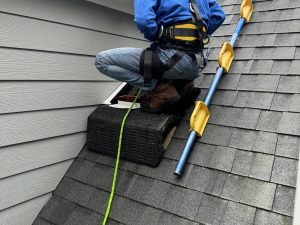
Clean and sanitize. If rodents have been active in your attic, crawlspace, or living areas, the contamination stays behind even after the rodents are gone. We handle attic remediations and crawlspace encapsulations to remove contaminated material, sanitize affected areas, and restore what needs to be restored. This step is where hantavirus risk is directly reduced. The CDC recommends using proper protective equipment and disinfecting all contaminated surfaces before cleanup — exactly the process we follow.
Modify the habitat. Rodents don’t randomly choose a home — they choose it because it offers food, shelter, and access. We advise on the conditions around your property that are making it attractive. That might be vegetation contact, debris storage, or conditions in the crawlspace or attic that need to change.
Maintain the barrier. A one-time service doesn’t keep a structure protected. Our ongoing pest and rodent control services give you consistent monitoring and population management so issues get caught early — before they become a health concern.
This is how you manage rodent risk long-term. Not a single trap. Not a bag of bait. A system.
What You Should Actually Be Doing Right Now
You don’t need to panic about hantavirus. You do need to be informed and proactive.
If you have any of the following situations, it’s time to call:
- You’ve seen rodent droppings in your attic, crawlspace, garage, or living space
- You’ve heard scratching or movement in your walls or ceiling
- You’ve noticed gnaw marks on materials, wiring, or stored items
- You have a crawlspace that hasn’t been inspected in the past year
- You’re preparing to clean out a space — shed, storage unit, attic — that may have had rodent activity
Don’t sweep it out, vacuum it up, or blow it out with a leaf blower. The CDC is explicit that dry sweeping or vacuuming rodent droppings can release contaminated particles into the air. If there’s any possibility of rodent contamination, you need proper protective equipment and the right process. That’s what we’re here for.
Schedule a Rodent Inspection
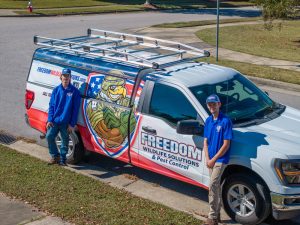
Call or text us at [919-584-8650] or visit freedomwildlifesolutions.com to request your inspection.
We’re a veteran-owned, licensed wildlife and pest control company serving the Triangle since 2018. We don’t sell fear. We solve problems.
Sources: WRAL — “Should you worry about hantavirus?” (May 8, 2026) | WRAL — “This is not Covid: What to know about hantavirus” (May 11, 2026) | CDC — Andes Virus Outbreak on a Cruise Ship: Current Situation | World Health Organization — Disease Outbreak News, May 8, 2026
Written by Rob Weaver, Owner — Freedom Wildlife Solutions & Pest Control | 8+ Years Wildlife & Rodent Remediation
Freedom Wildlife Solutions & Pest Control | Clayton, NC | Veteran-Owned | [freedomwildlifesolutions.com]
