

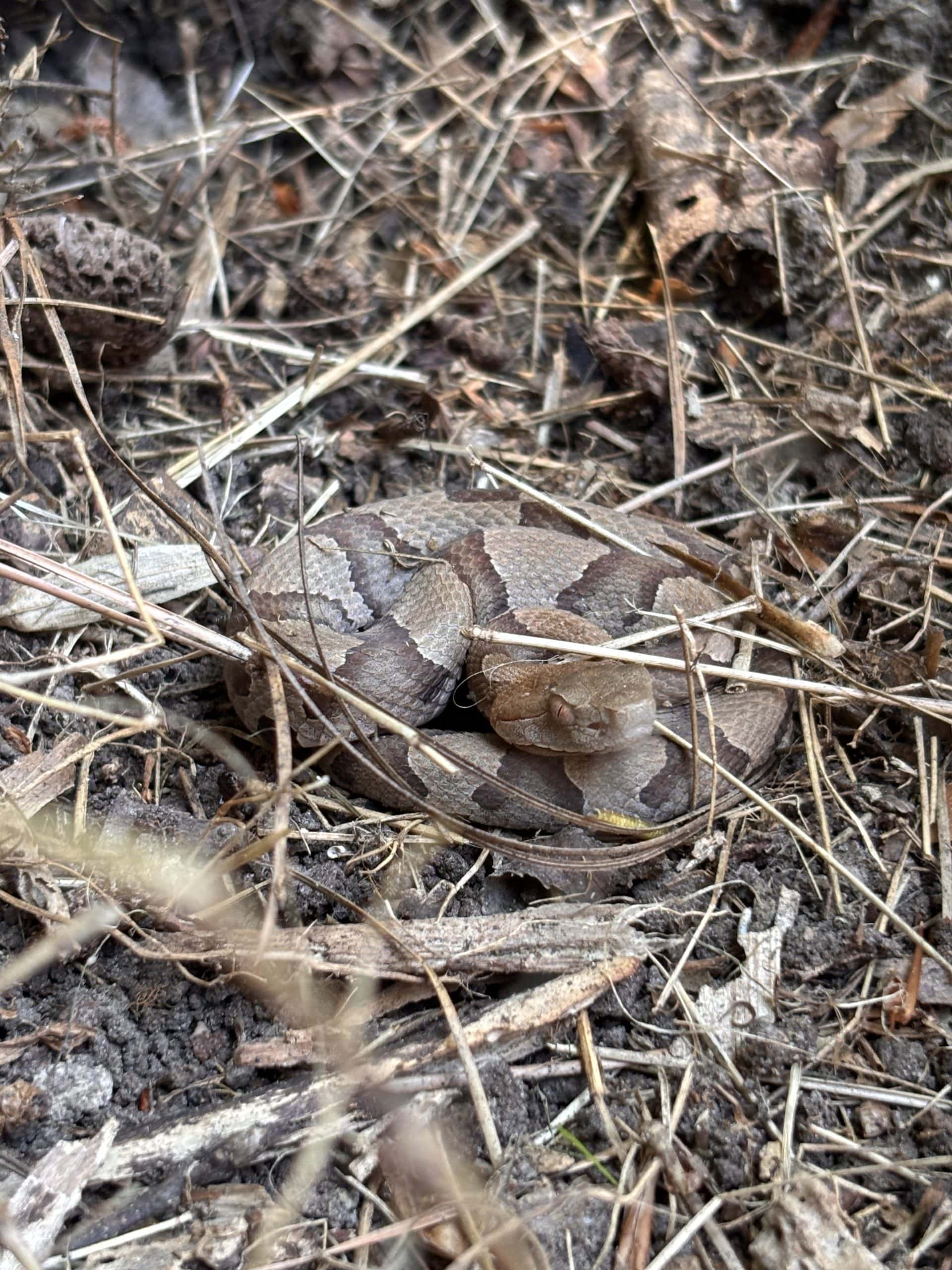
Copperhead Snakes in North Carolina: How to Identify Them and Keep Them Out of Your Yard
You step out to the garden, reach down to pull a weed, and freeze. There, half-hidden in the mulch, is a thick, copper-colored snake that was not there a second ago — or maybe it was, and you just didn’t see it.
If that’s happened to you this summer, you’re not alone. The copperhead is the most common venomous snake in central North Carolina, and the warm months are when homeowners across Raleigh, Clayton, and the rest of the Triangle start running into them. We get the calls every week.
Here’s what you need to know: how to tell a copperhead from the harmless snakes it gets confused with, what those bright-tailed baby copperheads are all about, whether a bite is something to panic over, and how to make your yard a place copperheads want to avoid.
Why You’re Seeing Copperheads Right Now
Copperheads are cold-blooded, so their activity tracks the temperature. From spring through fall they’re out hunting, basking, and — by late summer — giving birth. The Piedmont and the Triangle sit in prime copperhead country, with the woods, creeks, and wood-edged yards they love.
They’re ambush hunters. A copperhead doesn’t chase you down — it sits still, blends into the leaf litter, and waits. That camouflage is exactly why people get surprised by them. A copperhead lying across a pine-straw bed or a stack of firewood can be almost invisible until you’re right on top of it.
What Does a Copperhead Look Like?
Copperheads have a few features that set them apart once you know what you’re looking at:
- A coppery, tan, or pinkish-brown body — the color that gives them their name.
- Dark crossbands shaped like an hourglass or dumbbell: wide on the sides, narrow across the spine. From the side, each band looks like a Hershey’s Kiss.
- A distinct copper-toned, triangular head that’s wider than the neck.
- Vertical, cat-like pupils (don’t get close enough to check this — it’s for identifying one from a safe distance or in a photo).
- A heavy, muscular body for their length, usually two to three feet as adults.
That hourglass banding is the single best tell. Most of the harmless snakes people panic over don’t have it.
Snakes People Mistake for Copperheads
Plenty of harmless snakes get killed in NC yards because someone thought they were a copperhead. The usual mix-ups are the eastern rat snake, the northern water snake, the corn snake, and young black racers. These snakes have blotches, stripes, or solid coloring — not the clean, side-wide hourglass bands of a copperhead. When in doubt, don’t try to identify it by getting closer. Snap a photo from a safe distance and let a professional confirm what you’ve got.
Baby Copperheads: What They Look Like and Whether They’re More Dangerous
Copperheads don’t lay eggs — they give live birth, usually in late summer, around August and September. So if you start seeing small snakes around your home in late summer, baby copperheads are a real possibility.
A baby copperhead looks like a shrunk-down adult: same tan-and-copper coloring, same hourglass crossbands. The one extra clue is the tail — newborn copperheads have a bright yellow or yellow-green tail tip, which they wiggle to lure in frogs and lizards. That yellow tail fades as they grow.
Now the big question we get all the time: are baby copperheads more dangerous than adults? The honest answer is no. That’s a myth. The story goes that babies can’t control their venom and dump it all in one bite — but the science doesn’t back it up. Adult copperheads have bigger fangs and deliver more venom. A baby copperhead is venomous and deserves respect, but it is not somehow deadlier than its parents. The reason babies feel scarier is simply that they’re harder to spot.
Are Copperheads Dangerous? What a Bite Actually Means
Copperheads account for more venomous snakebites than any other snake in much of the eastern U.S. — not because they’re aggressive, but because they’re common and they freeze instead of fleeing. Step too close and you may get a defensive bite.
The good news: a copperhead bite is rarely fatal to a healthy adult. The bad news: it hurts, it can cause significant swelling and tissue damage, and it’s far more serious for small children, older adults, and pets. A bite is always a medical situation.
If you or a family member is bitten, stay calm, keep the limb still and below heart level, and get to an emergency room. If a pet is bitten, call your vet immediately. Don’t apply a tourniquet, cut the wound, or try to suck out venom — those old tricks do more harm than good.
How to Keep Copperheads Out of Your Yard
Copperheads show up where they find two things: cover to hide in and prey to eat. Take those away and you make your property far less inviting. Here’s where to start:
- Clear the cover. Wood piles, brush, leaf litter, tall grass, and dense ground cover are copperhead hotels. Keep firewood stacked off the ground and away from the house, and keep the lawn cut.
- Mind the mulch and rock. Deep mulch beds and loose rock walls give snakes cool, hidden places to rest. Keep mulch shallow near the foundation.
- Control the rodents. Copperheads hunt mice, voles, and other small rodents. A property with a rodent problem is a property with a snake food supply — which is one more reason ongoing pest and rodent control pays off.
- Seal the gaps. Snakes follow rodents into crawl spaces, garages, and basements through gaps along the foundation, vents, and door sweeps. Sealing those entry points keeps both out.
- Tidy the edges. Trim back shrubs and clear debris where the lawn meets the woods or a fence line. That transition zone is where copperheads travel.
When to Call a Professional
Freedom Wildlife Solutions & Pest Control is a pest control company that specializes in wildlife removal — and a venomous snake on your property is exactly the kind of job you don’t want to handle yourself. We’re veteran-owned and operated, based right here in Clayton, and we’ve safely removed copperheads and other snakes from homes all over the Triangle, backed by more than 500 five-star reviews.
When you call, we don’t just grab the snake and leave. We identify it, remove it safely, and then look at why it was there — the cover, the rodent activity, and the gaps that let it onto your property. Then we seal the home so the next one can’t follow. Our snake removal team in Fayetteville and across our service area handles the removal and the snake-proofing as one job.
Whether you’re dealing with a copperhead in the crawl space or just want a property that’s a lot less snake-friendly, the wildlife removal crew serving Clayton can help. We cover the whole Triangle, including wildlife removal in Cary and the surrounding towns.
“David Ray removed 2 copper head snakes in the crawl space at my house in about 10 minutes. He is very knowledgeable in the snake field. Would highly recommend David to help with the removal of those critters. Wendell NC. He will also provide you with an estimate to snake proof your home. Would give 10 stars if possible. Thank you David.”
— Carol B., Wendell, NC (Google review)
Don’t Take Chances With a Venomous Snake
A copperhead in the yard isn’t a reason to panic — but it isn’t something to ignore or to handle on your own, either. If you’ve seen one around your home, there’s a good chance the conditions that drew it in are still there.
If you’re in Raleigh, Clayton, Cary, Fayetteville, or anywhere in the Triangle, call Freedom Wildlife Solutions & Pest Control at (919) 584-8650. We’ll identify what you’re dealing with, remove it safely, and make your home a place copperheads want to stay away from.
Frequently Asked Questions
What does a baby copperhead look like?
A baby copperhead looks like a miniature adult — tan to copper colored with dark, hourglass-shaped crossbands that are wide on the sides and narrow across the back. The giveaway is a bright yellow or yellow-green tail tip, which fades as the snake matures. Baby copperheads are venomous from birth.
Are baby copperheads more dangerous than adults?
No — that’s a myth. Adult copperheads deliver more venom and have larger fangs. Baby copperheads are venomous and should be respected, but the idea that they can’t control their venom and are therefore more dangerous isn’t accurate.
Are copperheads dangerous to people and pets?
A copperhead bite is painful and needs medical attention, but it’s rarely fatal to a healthy adult. Bites are more serious for small children, the elderly, and pets. Copperheads freeze and rely on camouflage instead of fleeing, which is why people get bitten without seeing them. If you or a pet is bitten, seek care right away.
How do I keep copperheads out of my yard?
Remove what attracts them: clear wood piles, leaf litter, tall grass, and dense ground cover, keep mulch shallow near the house, seal gaps around the foundation and crawl space, and control the rodents copperheads hunt. A professional can inspect, remove any snakes, and seal entry points.
What should I do if I find a copperhead at my house?
Keep your distance, keep kids and pets away, and don’t try to kill or move it — most bites happen when people handle or corner a snake. Call a professional to identify and remove it safely and to find out how it’s getting onto your property.
